Cedarburg Is Two Governments Wearing One Name
October 1, 2026
October 1, 2026
North of Stonewall Farms, near the Village of Grafton's water tower, a single subdivision called Hawks Ridge sits on a property line that used to run straight through its middle. For years the Cedarburg-Grafton school district boundary cut across individual lots rather than following any road, fence, or platted edge. Village of Grafton planning records describe the fix: a survey map that formally splits Hawks Ridge into two parcels, one assigned to the Cedarburg attendance area and one to Grafton's, with local officials working through the Wisconsin Department of Public Instruction to make the boundary match reality on paper.
That is not a historical footnote. It is the clearest evidence of something that shapes every "Cedarburg" home search: the name on the listing does not tell you which government collects your tax bill, and it does not reliably tell you which school district your kids attend either.
Search "homes for sale in Cedarburg" and the results blend two legally separate municipalities. The City of Cedarburg has a population of roughly 12,000 packed into 4.87 square miles, most of it the walkable historic core built along Cedar Creek. The Town of Cedarburg is a different entity entirely, with about 6,000 residents spread across 25 square miles of land bordering the Village of Grafton, the City of Mequon, and the towns of Grafton, Saukville, and Jackson.
Each has its own elected board, its own budget process, and its own property tax levy. They share almost nothing structurally except a name and one jointly funded department: the Cedarburg Fire Department, which serves both jurisdictions under a cost-sharing agreement.
That shared fire department is a useful test case, because it shows how differently the City and Town translate the same expense into a tax bill. When voters in both jurisdictions considered a 2024 referendum to add firefighter-paramedic positions, the ballot math was not identical. City of Cedarburg property owners faced an increase of about $67.82 per $100,000 of assessed value, while Town of Cedarburg property owners faced about $57.08 per $100,000, according to figures the Town published ahead of the vote. Neighboring communities on the same ballot cycle showed even wider spread: Port Washington's increase ran closer to $91 per $100,000, the Village of Grafton's to $94, while the Town of Grafton's sat near $52.
Both the City and Town referendums passed, with the Town recording 63.65 percent in favor and the City 66.76 percent, according to the Town's own election notice. But the fact that two governments funding the identical service arrived at different per-household numbers is the point. The City and the Town set their levies independently every year, and nothing requires them to move in step.
The most recent confirmed figure comes from the Town's 2026 budget, approved late last year. The Town Board set its rate at $2.35 per $1,000 of assessed value, meaning a home assessed at $485,000 pays about $1,140 in town-level property tax this year, roughly $15 more than in 2025. That number applies only to the Town's own levy. It says nothing about what the City charges its residents, because the City calculates that independently.
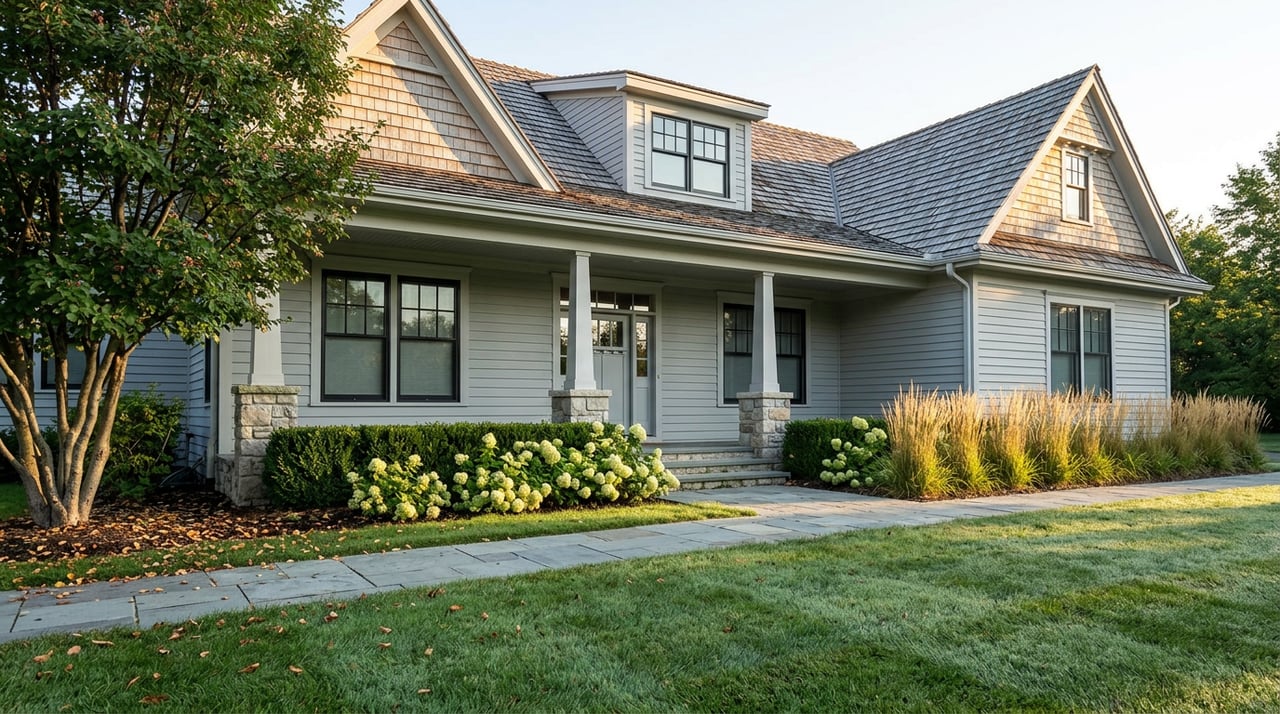
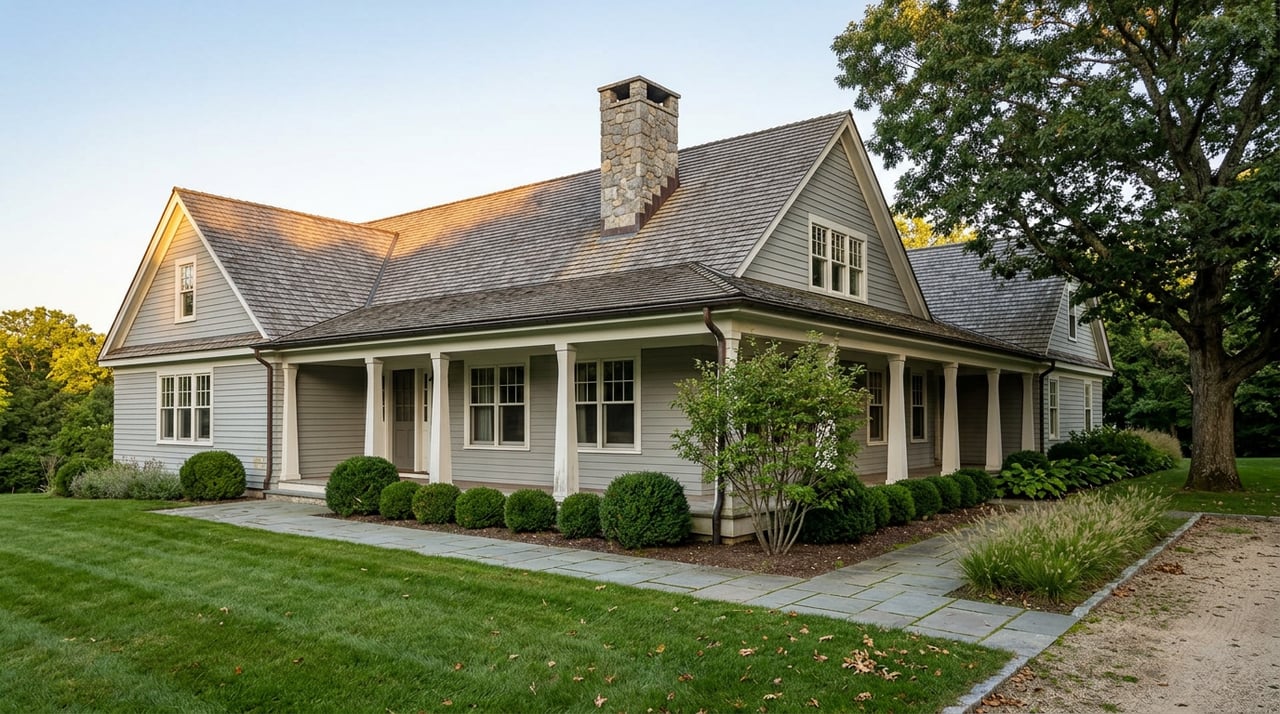
The tax structure lines up with a real difference in what you're buying. The City offers sidewalks, a compact historic downtown, and lots sized for walkability. The Town trades that density for acreage: subdivisions like the Behrens, off Cedar Creek Road near Highway 1, sit on larger platted lots with preserved wetlands and a private trail system, while Hidden Valley Lake is built around a private, HOA-managed lake that rarely turns over inventory.
| City of Cedarburg | Town of Cedarburg | |
|---|---|---|
| Population | ~12,000 | ~6,000 |
| Land area | 4.87 sq mi | 25 sq mi |
| Governing body | City Council | Town Board |
| Character | Walkable, historic downtown core | Larger lots, rural-suburban |
| Fire/EMS | Joint department, separately levied | Joint department, separately levied |
Neither option is better. They're different products wearing the same place name, and the tax line is one of the few places that difference shows up in writing before closing.
School assignment adds a third layer that follows neither the City nor the Town boundary. The Cedarburg School District includes all of the City, most of the Town, and reaches into parts of the City of Mequon, the Town of Jackson, and both the Town and Village of Grafton. At the same time, a small section on the east side of the Town of Cedarburg attends Grafton schools instead, according to the Town's own published district description.
Hawks Ridge is the sharpest illustration of how granular this gets. A subdivision can sit entirely within one municipality and still have its lots split between two school districts, which is exactly what prompted the formal boundary correction there. The Cedarburg School District's own guidance for prospective residents is blunt about this: to confirm whether a specific property falls inside district lines, call City Hall directly and ask for the tax code, since the district is officially identified as tax code 1015. A mailing address that says "Cedarburg" is not confirmation. The tax code is.
If you've compared "Cedarburg" market data across a couple of national listing sites, you may have noticed the numbers don't agree with each other. One recent snapshot put median days on market in the high 30s to mid-40s, while another, covering a similar window, reported a median closer to a dozen days. Some of that gap comes down to how each platform defines the geography it's measuring and which listings it counts in a given month. When City and Town inventory get pooled under one label, a handful of unusual sales, a cluster of new construction in one subdivision, or a slow month in one jurisdiction can swing a blended average without the underlying market shifting at all.
That's the practical cost of treating "Cedarburg" as one market instead of two. The aggregate number is real, but it's an average of two different tax jurisdictions, two different lot-size norms, and a school boundary that answers to neither. A buyer comparing two listings on price per square foot alone is comparing two things that may not actually be comparable.
A few questions settle most of this before an offer goes in:
Does moving from the City to the Town of Cedarburg automatically lower my property taxes? Not automatically. The Town's levy has run lower than the City's in the cases documented here, but rates are set independently each year by two different boards, and lot size, assessed value, and school tax code all factor into the final bill.
How do I find out whether a specific address is zoned for Cedarburg or Grafton schools? Call Cedarburg City Hall and ask for confirmation using tax code 1015, the code the district uses to identify properties within its boundaries. Don't rely on the city name in a listing's address field.
Do City and Town of Cedarburg residents get the same fire and EMS response? Both jurisdictions are served by the same Cedarburg Fire Department under a shared agreement, but each government funds its share of that department through its own separately set tax levy.
If you're weighing two "Cedarburg" listings and want to know which government actually holds the parcel, which school tax code applies, and how the full levy stacks before you write an offer, Kelton Hatton can walk through that jurisdiction check with you as part of a buyer consultation.
This article is general information, not legal, tax or financial advice. Consult a qualified professional about your situation.
Stay up to date on the latest real estate trends.
Get assistance in determining current property value, crafting a competitive offer, writing and negotiating a contract, and much more. Contact Kelton today to discuss all your real estate needs!