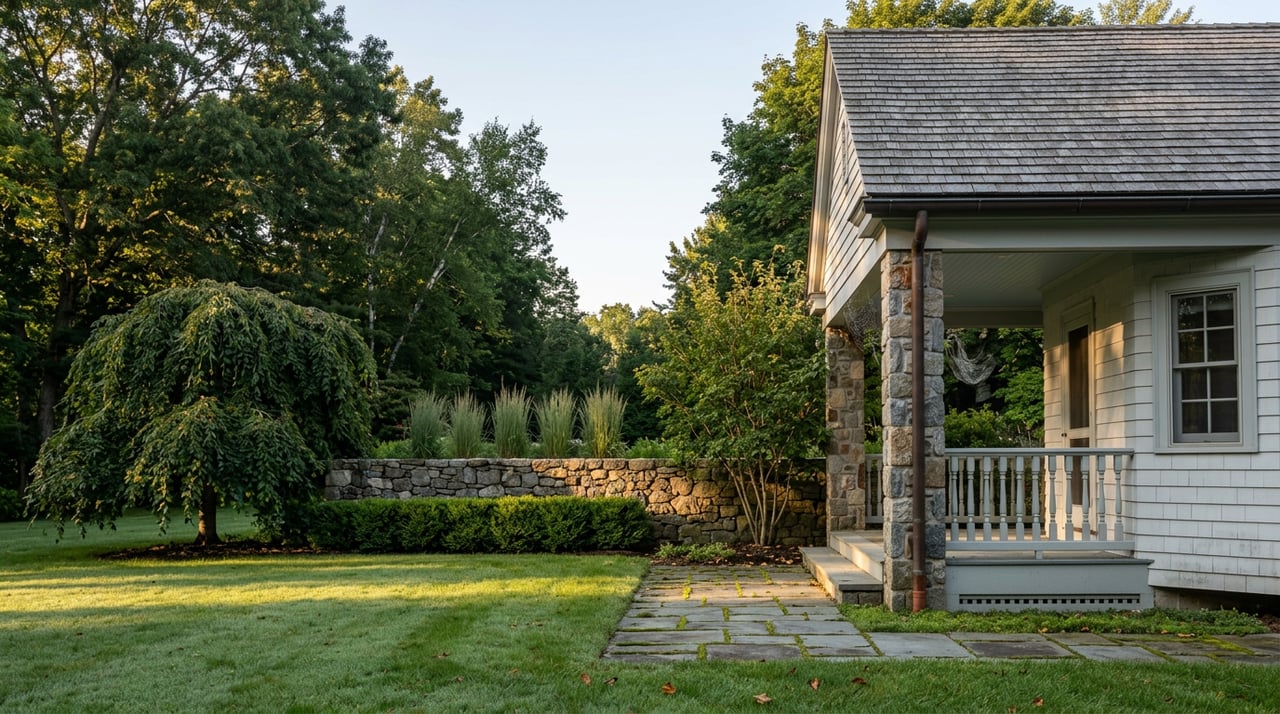
Bayside Bluff Building Code Risks for Lakefront Lots
September 10, 2026
September 10, 2026
Ask anyone who has owned a Lake Drive property since 2020 about the bluff, and the story is usually about water. The Great Lakes hit record highs that year, and waterfront owners up and down this shoreline watched their bluffs take a beating. That memory has calcified into a kind of local shorthand: bluff lot means erosion risk, and erosion risk means proceed with caution.
The water that made that story true isn't the water sitting off Bayside right now. By the most recent official reading, Lake Michigan's elevation as of July 31, 2026 was about an inch above its long-term average for the month, a benchmark the lake hadn't cleared since its monthly mean fell below average in October 2024 and stayed there through early 2026. The U.S. Army Corps of Engineers' six-month forecast issued alongside that reading points to a normal seasonal decline into fall, not a run toward the 2020 peaks. The crisis that shaped everyone's mental model of a Bayside bluff has passed.
The Village of Bayside's own building code governs work on a bluff-adjacent property. Its requirements remain in place regardless of recent water levels.
Bayside's municipal code sets out rules for construction on and around the lake bluff that are worth knowing before you draw up plans, not after. No structure or building may go up on the flat area at the top of the bluff unless a registered professional engineer certifies that the footings, construction method, and materials won't disturb natural drainage, won't add to erosion on the bank, and won't compromise the structural integrity of a neighboring lot. That certification has to reach the village manager before a building inspector can issue a permit.
The code goes further on where you can build at all. Cantilevering a structure out over the lake bluff is prohibited outright, regardless of what an engineer signs off on. Building on the slope or at the foot of the bluff is also barred, with one exception: retaining walls built specifically to prevent erosion and slippage of the bluff, and those still require engineer-prepared plans and a standard village building permit before construction starts. On top of all that, the village manager or building inspector can require a project-specific setback from the edge of the bluff as a condition of granting any permit at all, which means the number isn't fixed in the code; it is determined case by case.
None of this is a reaction to any particular water year. It's a standing requirement that applies whether the lake is at a record high or, as it is now, tracking close to its long-term average.
The village ordinance is only half the story. Anything that touches the lakebed itself, or places material below the Ordinary High Water Mark, falls under a separate state process administered by the Wisconsin DNR. State law requires DNR authorization for any material placed in Lake Michigan, and larger shoreline protection projects can also require sign-off from the Army Corps of Engineers. These two approval chains run independently of each other.
| Layer | Who administers it | What triggers it | What it requires |
|---|---|---|---|
| Village of Bayside | Village building inspector | New structure on bluff-top flat area, retaining wall, addition near the bluff edge | Engineer certification or engineer-prepared plans, as applicable; possible case-specific setback; standard building permit |
| Wisconsin DNR | State water management staff | Work below the Ordinary High Water Mark, material placed in Lake Michigan | DNR Water ePermitting authorization, possible Army Corps review |
A village permit in hand doesn't clear you with the DNR if the project reaches the shoreline itself, and a DNR authorization doesn't substitute for the village's engineer certification requirement on a bluff-top structure. The DNR does allow property owners to place temporary emergency material to protect against active erosion without waiting for a permit to be approved first, but that provision covers emergency stabilization, not new construction, and it doesn't remove the requirement to formalize a permit afterward.
Current data helps put the water-level story in perspective. After the 2020 highs, Great Lakes water levels trended down, and Lake Michigan's monthly mean dropped below its long-term average in October 2024 for the first time in a decade, staying there into early 2026. By July 31, 2026, that pattern had reversed. The lake sat at an elevation of 579.46 feet, roughly an inch above its long-term average for July, and the Corps' forecast called for a routine seasonal decline through late summer and fall, landing near the long-term average rather than approaching the 2020 extremes.
That doesn't mean bluff erosion has stopped. The Wisconsin DNR is clear that erosion on the Great Lakes happens even during low water years, since wave energy still moves sediment regardless of the lake's elevation. What it does mean is that a seller or buyer weighing risk on a Bayside bluff lot today is working from a different baseline than the one that shaped opinions in 2020. The regulatory requirements haven't moved. The lake level has changed.
For a specific property, the relevant approvals depend on the work being considered.
Does every home in Bayside need an engineer's certification to sell? No. The certification requirement applies to new construction or alteration of structures on the flat area at the top of the lake bluff. Building on the slope or at the foot of the bluff is barred except for retaining walls built specifically to prevent erosion and slippage of the bluff, which require engineer-prepared plans and a standard village building permit before construction starts. Any lakefront or Lake Drive property considering an addition near the bluff should confirm with the village before finalizing plans.
What if my property already has an older retaining wall or structure built without this certification? Confirm the status of any existing bluff-adjacent structure with the village building department well before you list, especially if you plan to apply for a new permit that touches the same footprint.
Should I be worried about erosion given the high water years earlier this decade? Current levels are tracking near the long-term average as of mid-2026 rather than the 2020 extremes, but the DNR is clear that erosion continues at any water level. The village's building requirements exist independent of where the lake sits in its cycle, which is the point: they're not a response to a crisis, they're a standing rule.
Bluff-adjacent property in Bayside has permit requirements that buyers and sellers should understand before a renovation or transaction. Confirming any required engineer certification, any project-specific setback, and any applicable DNR review before a listing goes live helps buyers and sellers plan for the process. If you're weighing a sale on a Bayside bluff lot, or evaluating what a lakefront purchase actually requires before you commit, Kelton Hatton can walk through the sequence with you and coordinate the right professionals early. Request a Free Home Valuation to start that conversation.
This article is general information, not legal, tax or financial advice. Consult a qualified professional about your situation.
Stay up to date on the latest real estate trends.
Get assistance in determining current property value, crafting a competitive offer, writing and negotiating a contract, and much more. Contact Kelton today to discuss all your real estate needs!