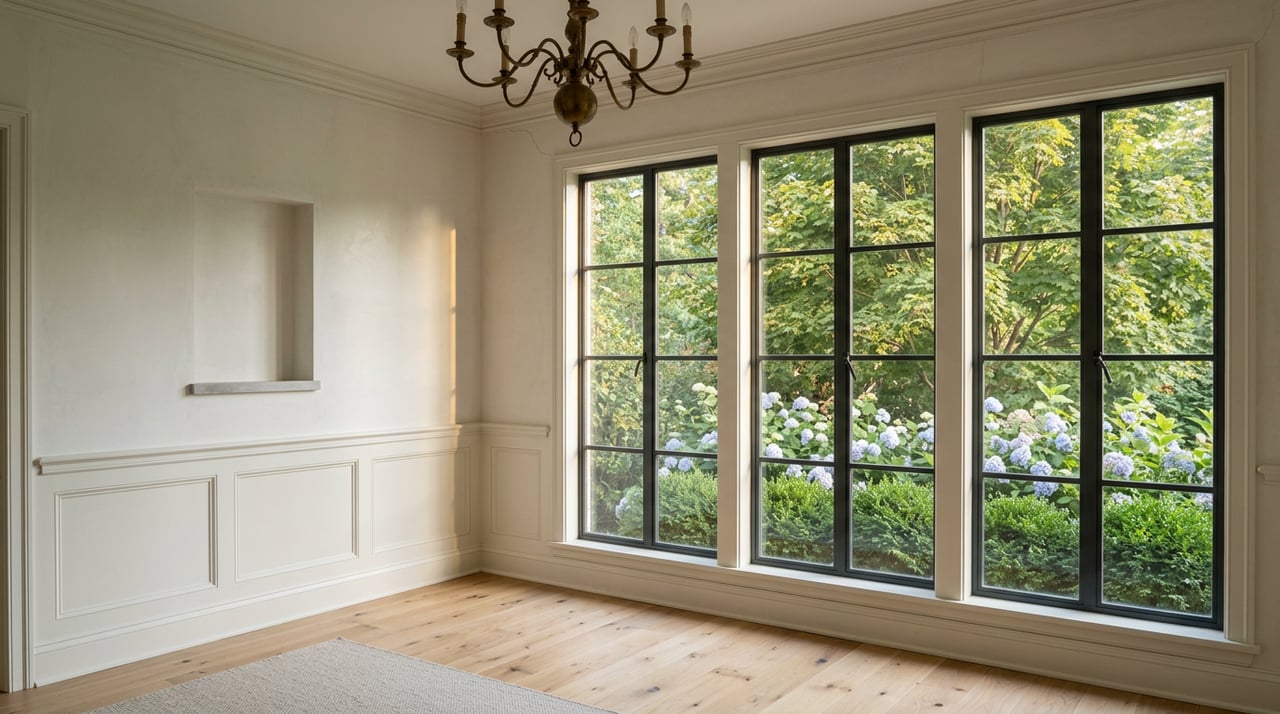
Selling a Prewar Whitefish Bay Home With a Lead Service Line
July 16, 2026
July 16, 2026
A buyer's agent asked a very specific question at a Whitefish Bay showing last month. Not about the roof, not about the boiler, not about the basement. She wanted to know whether the seller had emailed a photo of the service line to [email protected], and whether the Village had updated its inventory in response.
Two years ago that question did not exist in this market. Today it decides which offers get written strong and which arrive full of contingencies.
In late 2024, a TMJ4 listening session at Village Hall put a figure on the record: over 84% of homes in Whitefish Bay are affected by lead service lines, roughly 2,000 properties. That number is not a health story. The Village's own data shows that of more than 350 home water tests processed by the Wisconsin State Laboratory of Hygiene in the past year, only one exceeded the EPA action level of 15 ppb, and the North Shore Water Commission has treated with orthophosphate since 1996 to keep lead from leaching into the water in the first place.
The 84% is a transaction story. A well-informed buyer now walks into a prewar house assuming a lead line until the seller proves otherwise. That shift has consequences at three separate points in the deal.
In 2026 the Village Board adopted a 2026–2031 Capital Improvement Plan that funds the replacement of one mile of aging water main and the associated lead service lines annually. The methodology, presented to the Public Works Committee on January 12, 2026, weights road condition, average daily traffic, water main breaks, pipe material, and age.
For a seller, the practical read is:
None of this appears on the MLS. All of it appears in the mind of a buyer's inspector.
Wisconsin Statute Chapter 709, updated through June 19, 2026, requires most sellers to deliver a Real Estate Condition Report within ten days of accepting an offer. The Wisconsin REALTORS® Association refreshed the form on July 1, 2023, adding prompts for solar systems, rented water treatment equipment, private road agreements, and internet service. The statutory language on plumbing defects has not changed.
Here is the awkward part. Your agent cannot help you answer. As Powers Realty and Wisconsin real estate counsel have both written publicly, a licensee may explain the form but may not advise on how to answer a specific question, because that would cross into legal advice. Under Wis. Stat. § 709.035, a seller who learns something new before acceptance must submit an amended report. That means the moment you request a photo review from the Village and the inventory changes, your disclosure obligations move with it.
The federal Residential Lead-Based Paint Hazard Reduction Act of 1992 runs on a parallel track for any home built before 1978. The seller must deliver the EPA pamphlet, provide known records, include the Lead Warning Statement, and allow the buyer a ten-day window to conduct an inspection or risk assessment. Lead paint and lead service lines are legally distinct, but a buyer's attorney reads them together.
The clearest local example of how a public project reshapes a private closing is the intergovernmental agreement between the Village of Whitefish Bay and the Village of Shorewood for the 2026 reconstruction of N. Oakland Avenue.
Seven Whitefish Bay properties on the east side of Oakland were historically fed from a Shorewood-owned main. The two villages agreed to separate the systems, and as part of the reconstruction the Village of Whitefish Bay assumed responsibility for public and private lead service line installation and replacement costs at three specific addresses: 4544 N. Oakland, 4606 N. Oakland, and 1811 E. Glendale. The resolution also notes that Whitefish Bay may use special assessments to recover reimbursement for design, construction, and administrative costs on the private side.
If you own on a street queued for water main work in the CIP window, that is the template. It is not a rumor. It is the shape of what will happen.
The transaction consequences show up in a predictable order.
At inspection. A competent home inspector now photographs the water service where it enters the meter and flags anything that reads as lead or galvanized downstream of a lead gooseneck. Milwaukee-area electrical contractors including Lehmann Electrical routinely encounter knob-and-tube alongside these older services, and long-tenured local inspectors such as Hensiak Inspection Services and House to Home Inspections know the prewar Whitefish Bay building envelope well enough to distinguish original 1920s runs from later replacements. Expect that photo to appear in the inspection response.
At the negotiating table. Buyers ask for one of three things: a price concession sized to a private-side replacement, a seller-funded replacement before closing, or an escrow holdback. The private-side cost varies with driveway length, landscaping, and distance from the main, and the Village's own materials caution that principal costs must be paid locally because grants are limited.
At the lender's file. Some lenders and insurers are beginning to ask about known lead service lines in the property. The RECR answer follows the seller into that conversation.
The sellers who lose the least are the ones who resolve the ambiguity before a buyer's inspector introduces it.
Doing this in the six weeks before listing does two things at once. It moves a category of unknown risk off the negotiating table, and it lets the marketing lead with the house rather than answer for the pipe.
Prewar Whitefish Bay houses reward the buyer who wants leaded casements, clinker brick, and quarter-sawn oak. That is the audience worth marketing to. A seller who has already handled the service-line question is free to spend the listing period on staging, photography, and the light cosmetic work that lets an editorial-quality photograph carry the offer conversation. A seller who has not is spending that same period reacting to inspection responses.
The choice is which project owns the calendar.
Does a lead service line have to be replaced before I can sell? No. Wisconsin does not require replacement as a condition of transfer, and the Village's plan runs through 2031 with an EPA deadline of 2037. What is required is honest disclosure on the Real Estate Condition Report under Wis. Stat. Ch. 709, and compliance with federal lead-based paint rules for pre-1978 homes.
If the Village replaces the public side, am I responsible for the private side? It depends on the project. In the 2026 Oakland Avenue agreement, the Village of Whitefish Bay assumed the private-side cost at three named addresses, with the option to recover through special assessment. That structure is project specific. Ask the Building Services Department at 414-962-6690 about your street before assuming either outcome.
Will a buyer walk away over a lead service line? Rarely, in this market and at this price tier. Buyers who want a 1920s Whitefish Bay house understand what they are buying. What they will do is write the offer with more contingencies and more room to renegotiate at inspection. The seller who has already produced a Village inventory update, a water test, and a pre-listing inspection removes most of that room.
At Kelton Hatton, we prepare prewar Whitefish Bay homes the same way we prepare lakefront listings, with a written plan for disclosure, presentation, and the specific frictions that surface between offer and closing. If you are thinking about a 2026 or 2027 sale, request a free home valuation and we will walk your property, review your service-line status against the Village inventory, and map out the staging and light renovation work that lets the house lead the conversation.
Stay up to date on the latest real estate trends.




Get assistance in determining current property value, crafting a competitive offer, writing and negotiating a contract, and much more. Contact Kelton today to discuss all your real estate needs!