In Cedarburg, the Biggest Closing Risk Isn't on the Disclosure Form
August 13, 2026
August 13, 2026
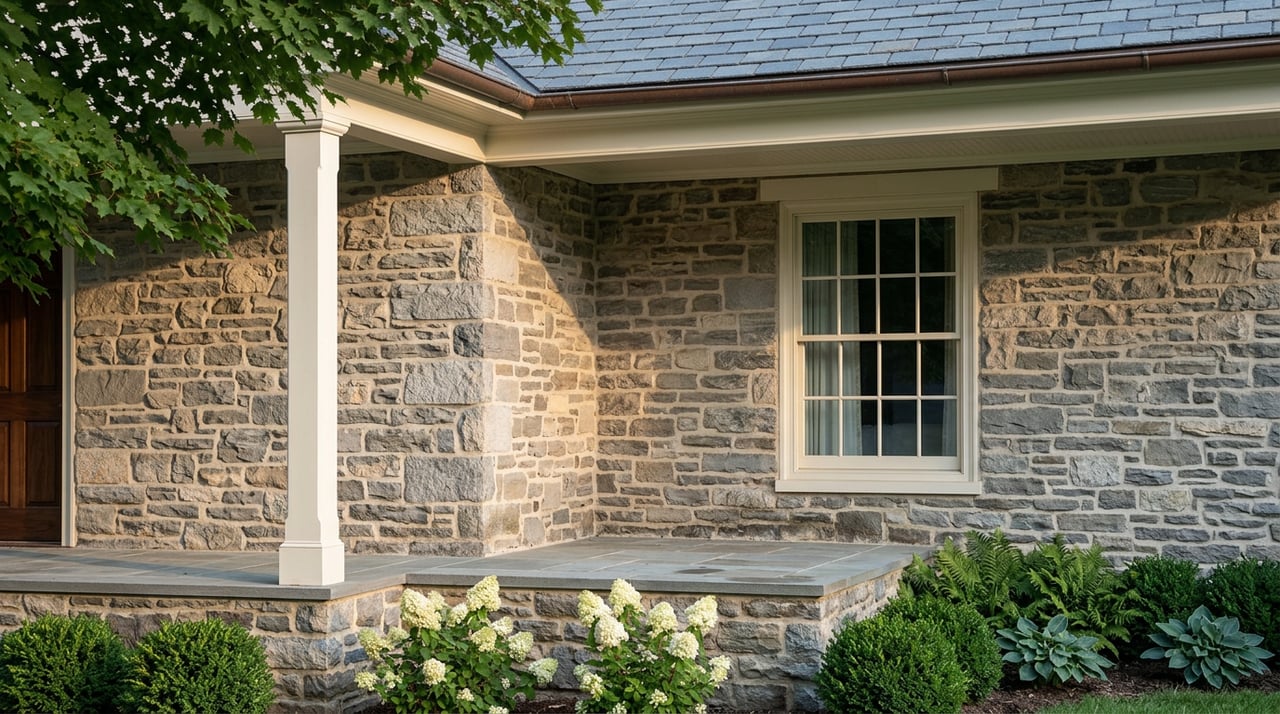
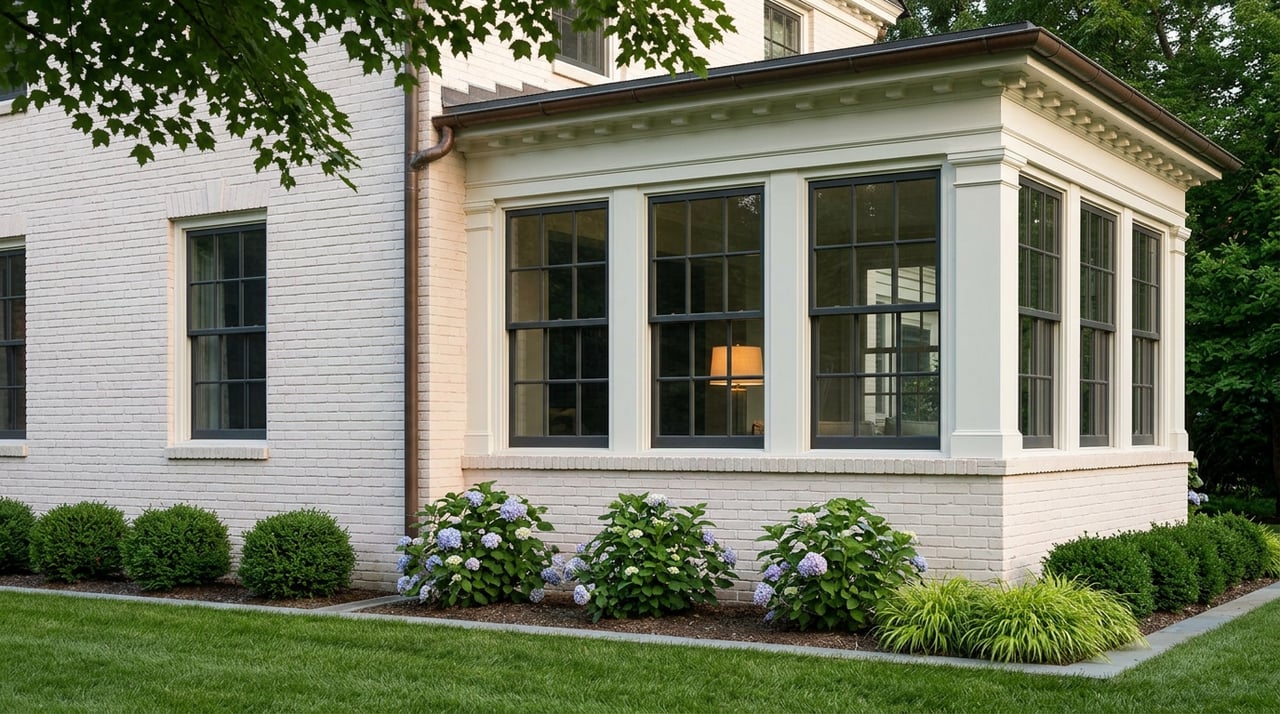
Two Cedarburg closings could happen on the same afternoon and never touch the same worry. A buyer signing on a stone farmhouse off a gravel road east of Highway 60, in the Town of Cedarburg, is going to spend the inspection period thinking about water. A buyer signing on a cream-brick house two blocks off Washington Avenue, inside the City, is going to spend the first year of ownership thinking about windows. Neither problem shows up where you'd expect.
That is the part of Cedarburg's real estate market that rarely gets explained clearly: the item that Wisconsin's disclosure form actually asks about is the one state law does not require anyone to test, and the item that can genuinely restrict what a new owner is allowed to do to the house never appears on that form at all.
Wisconsin's Real Estate Condition Report, the statutory disclosure every seller of a 1-4 family home fills out under Chapter 709, asks the seller to check a box on three specific lines: "I am aware of defects in the well, including unsafe well water." "I am aware that this property is served by a joint well." And "I am aware of defects in the septic system or other sanitary disposal system." The seller has to deliver that report no later than 10 days after the acceptance of the contract of sale, and a buyer who does not receive it has the right to rescind.
Here is the part almost nobody expects: none of that requires a test. Ozaukee County is blunt about it. There is no state law or county ordinance requiring any private onsite wastewater treatment system to be evaluated before the sale of any property. Wisconsin's DNR says the same thing about wells. State law does not require a well inspection or water testing for a property transfer, and DNR is not involved in the real estate transaction.
That gap matters more in the Town of Cedarburg than almost anywhere else in the metro area, because most properties in the Town of Cedarburg are served by private well, and the county's own POWTS maintenance rule only kicks in on a schedule, not a sale. At least once every 3 years the septic tank and pump chamber, if applicable, must be pumped by a licensed pumping service and a report filed with the Environmental Health Department. A system can be inside that three-year window, fully compliant, and still never have been evaluated by anyone at the point a buyer is deciding whether to waive an inspection contingency.
So why does well and septic testing happen anyway, almost every time, on Town-side sales? Not because of a statute. It is often a requirement of the lending institution that will hold the mortgage for the buyer, because the lending institution often resells the mortgage on the secondary market and a passing evaluation is usually required for a lending institution outside of the area to be interested in the mortgage. The testing gets done because Fannie Mae and Freddie Mac's underwriting appetite requires it, not because Wisconsin or Ozaukee County does. If a well test surfaces on a Town-side RECR, that box is genuinely a judgment call by the seller, informed by whatever the last test showed. On a cash deal with no lender in the chain, there is no institutional backstop forcing anyone to look.
The well test itself, when it happens, follows a specific protocol. Drinking water wells must be tested for three contaminants: coliform bacteria, nitrate and arsenic. And it has to be done by a licensed professional. State law has provided since June 1, 2008, that it must be done by a licensed well driller or licensed pump installer. Between tests, the state's own guidance for private well owners recommends testing for bacteria and nitrate at least once a year, and arsenic and lead at least once every five years. A seller who has kept that rhythm has real documentation to hand a buyer before an offer even lands. A seller who has not is walking into the RECR question with nothing but a guess.
One more Town-side wrinkle worth flagging before a first walkthrough: a small number of older or rural parcels still rely on holding tanks rather than a conventional septic field, and the Town treats that as its own regulatory event. The applicant shall deposit with the Town a bond in cash, the sum of which shall be $1,000 for commercial and industrial properties and $600 for other properties, on top of a signed holding tank agreement with the Town. It is not a common scenario, but it is exactly the kind of detail that turns up mid-inspection and stalls a closing timeline if nobody flagged it at listing.
| City of Cedarburg | Town of Cedarburg | |
|---|---|---|
| Water supply | Municipal, via Cedarburg Light and Water Utility | Mostly private wells |
| Sewage | Municipal sewer connection required | Mostly POWTS (septic) or holding tanks |
| RECR well/septic lines | Usually not applicable | Often the most negotiated lines on the form |
| Testing required by law | No | No |
| Testing required in practice | Rarely an issue | Usually required by the buyer's lender |
Flip to the City side, and specifically to a home inside one of Cedarburg's local historic districts, and the friction reverses entirely. There is no checkbox on the RECR asking whether a property carries local landmark status. A buyer who wants to know has to go looking, and the City makes the information available through its own channels: a Landmarks Commission, a Historic Preservation Overlay Zoning District map, and three named historic districts. The Washington Avenue Historic District, the Columbia Historic District, and the Hamilton Historic District, the last of which was written and created by the Town of Cedarburg, with a small portion located within the City's municipal boundary.
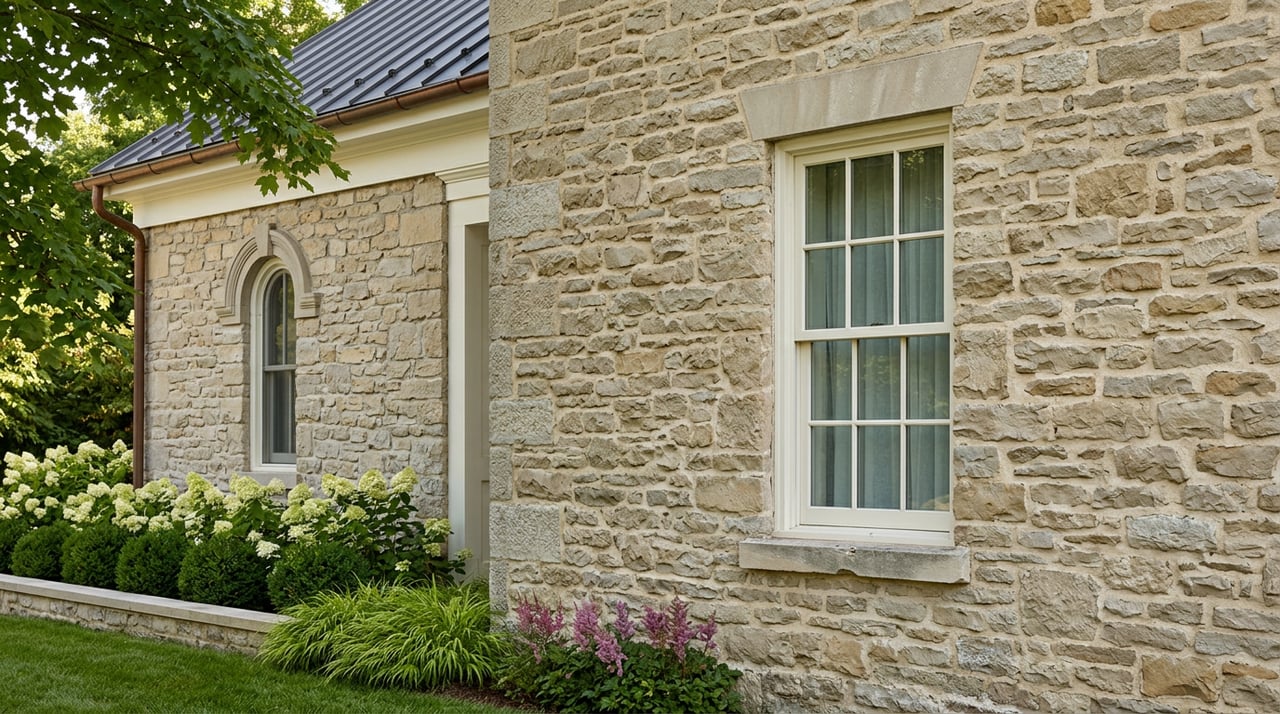
Washington Avenue is the one most buyers have actually walked through without realizing what it means for a future owner. Anchored on the south by St. Francis Borgia Catholic Church and on the north by the Woolen Mill, extending about five blocks and including over 100 properties, the district was listed in the National Register of Historic Places on January 17, 1986. Constructed mostly of locally quarried stone between 1847 and 1926, the district contains 119 buildings. National Register listing alone is largely honorific for a homeowner. Local landmark designation, layered on top of it through the City's own zoning overlay, is what actually restricts what an owner can do to the exterior.
The Town's version of that restriction is written into its own code, and it is unambiguous. No owner or person in charge of a landmark, landmark site, or improvement in an historic district shall alter or reconstruct all or any part of the exterior of such property, construct any improvement upon any such designated property, or cause or permit any such work to be performed upon such property unless the written approval of the Commission has been granted. That covers the obvious things, a new roofline or an addition, and the less obvious ones too: a different front door, replacement windows, repointed limestone. There is a narrow carve-out for genuine emergencies. Nothing in the chapter prohibits necessary construction, reconstruction, alteration or demolition pursuant to order of any governmental agency or court judgment for remedying conditions dangerous to life, health, or property, and in that case no Commission approval is required. Everything else waits for a meeting.
One detail that surprises people in the other direction: the Town cannot simply impose landmark status on a reluctant owner. Designations are made based upon the criteria established under the ordinance and the consent of the property owner. Existing districts and landmarks already carry the restriction. New ones require the owner to opt in. That is a meaningful distinction to raise with a design-minded buyer who is drawn to a stone farmhouse specifically because it looks historic but has never actually been designated. The character can be preserved by choice rather than by code, at least until an owner signs up for the award and the paperwork that comes with it.
The Town, for its part, treats that voluntary preservation as something worth recognizing publicly. The Landmarks Commission offers a Landmark Preservation Award to encourage the preservation of century-old structures, in keeping with the rural character of the Town and its historic agricultural heritage, and structures qualifying for nomination in 2026 must have been built before 1926. This year's application window ran January 1 through April 1 and has already closed, but the rolling hundred-year threshold means a home built in 1926 becomes newly eligible every January, a detail worth knowing if you are dating a property for resale value rather than just for its charm.
The practical sequencing looks different depending on which Cedarburg the address sits in.
Do I legally have to test my well before selling a Cedarburg home? No. Neither the state nor Ozaukee County requires it. In practice, most buyers using a mortgage will need a passing test because their lender's secondary-market buyer requires one, but a cash sale can close without any test at all.
Does Washington Avenue Historic District listing automatically restrict what I can do to my house? National Register listing itself is largely honorific. The restriction that actually limits exterior work comes from local landmark or historic district designation layered on top through the City's Historic Preservation Overlay Zoning District and Landmarks Commission, which is a separate, local mechanism from the federal listing.
Is the Hamilton Historic District regulated by the City or the Town? Both, depending on the parcel. It was originally written and created by the Town of Cedarburg, and only a small portion of it falls within the City's municipal boundary, so the governing commission depends on which side of that boundary a specific address sits.
Whichever Cedarburg you are buying or selling in, the paperwork tells only part of the story. If you are weighing a listing on either side of the boundary, or trying to understand what a specific property will actually let you do after closing, Kelton Hatton can walk through the well, septic, and landmark specifics with you before you write or accept an offer. Request a Free Home Valuation to start that conversation with the facts already in hand.
Stay up to date on the latest real estate trends.




Get assistance in determining current property value, crafting a competitive offer, writing and negotiating a contract, and much more. Contact Kelton today to discuss all your real estate needs!