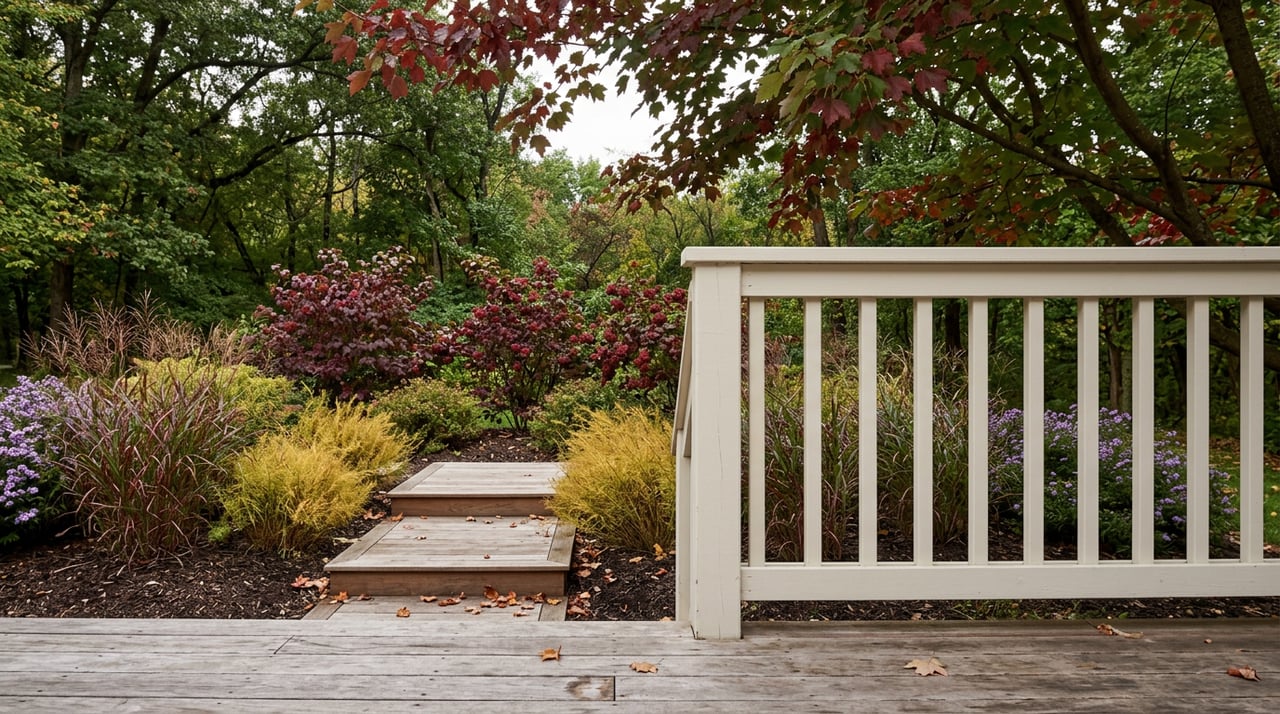
The Two Migrations of a Bayside Fall
August 20, 2026
August 20, 2026
Most years, the geese get all the credit. Someone hears honking overhead in late September, looks up, and calls it fall migration, case closed. But that overhead flyover isn't really where the interesting part happens if you live on this bluff. The real show is quieter, it starts closer to the ground, and it's already scheduled into Schlitz Audubon Nature Center's fall calendar in two very different ways.
One of those ways asks you to get in a car. The other is happening on the bluff behind your house whether you notice it or not.
Schlitz Audubon has booked a family outing this fall to Lake Mills Wildlife Area to watch Sandhill Cranes stage before their trip south, with September 27 held as the rain date. It's the kind of trip that draws a crowd for a reason: by late September, this year's young cranes have grown into their full size and the birds gather in visible numbers, tall and unmistakable, before pushing off for warmer ground.
Here's the detail worth sitting with. If the cranes staged along the Lake Michigan shoreline, Schlitz Audubon wouldn't need to run a bus trip. It would just point people down the Lake Trail. Instead the center organizes group transportation west, because that's where the open grasslands and stubble fields the cranes prefer actually are. The spectacle is real, but it isn't a Bayside spectacle. It's a Wisconsin spectacle that happens to have a pickup point in Bayside.
That's worth knowing if you've spent a few autumns here assuming the crane trip and the neighborhood's own bird activity were the same event. They're not. One is a field trip. The other doesn't require leaving your zip code.
The quieter story is the one built into the center's own geography. Schlitz Audubon sits on 185 acres that run from restored prairie down through ravines to the Lake Michigan bluff, and that shoreline strip functions as what birders call a stopover site: a place where migrating songbirds pause to refuel before continuing south. The center's fall calendar names this directly, with a field program built around the fruit-eating birds that use these bluff-top habitats specifically because they're loaded with food right when migration pressure peaks.
This is also why Schlitz Audubon carries an official Important Bird Area designation tied to the waterfowl habitat along this stretch of shoreline. That's not neighborhood branding. It's a recognition that this particular strip of bluff does something ecologically useful that the surrounding built-up shoreline mostly doesn't.
The center's regular Saturday Morning Bird Walk, held the third Saturday of each month, shifts its focus with the season. In summer, the walk looks for resident nesting species. By fall, the same walk is pointed at migrants moving through, using the same six miles of trail and the same 60-foot observation tower that gives visitors a view over the treetops toward the open water. If you've climbed that tower in July and again in October, you've effectively watched the shift happen without anyone explaining why the crowd of species looked different.
None of this requires registration for most of it, and none of it requires driving anywhere. It requires being on the bluff on the right morning, which is a much lower bar than a chartered trip to Jefferson County.
Here's the part that changes how you might plan an October Saturday. The bluff-side stopover migration and the inland crane migration are running on roughly the same calendar, but they're not the same event, and they don't reward the same kind of attention. The crane trip is a single scheduled outing you either catch or miss. The shoreline songbird movement is a six-week window, quieter, less choreographed, and available on your own schedule as long as you're paying attention to the right stretch of trail at the right hour.
If you've only ever thought about fall migration as "the day the geese come through" or "that crane trip everyone posts about," you've been tracking the version of migration that happens somewhere else. The version happening on your own bluff has been going on the whole time, in the same ravines and prairie edges you might otherwise treat as scenery.
If you want to notice the shoreline migration rather than just walk past it, a few things from the center's own program list are worth building a morning around:
None of this requires a membership or an RSVP for most of it. It requires knowing that the interesting thing is already happening on the trail you've probably walked a dozen times without thinking about why the birds looked different in October than they did in July.
There's a version of living in Bayside where the bluff is just a nice backdrop, the kind of thing you mention to guests without looking too closely at it. And there's a version where you know that for about six weeks every fall, that same bluff is doing quiet, specific ecological work, hosting birds that are choosing this exact stretch of shoreline over hundreds of other miles of coastline because the habitat here happens to be right.
That second version doesn't cost anything extra. It just means walking the same trail with a slightly different question in mind.
If this is the kind of detail that makes you glad you live where you live, or if you've been quietly wondering what a move within the North Shore might look like someday, Kelton Hatton is always happy to talk through what's changing in Bayside and the surrounding lakefront communities. Reach out anytime for a conversation, or request a free home valuation when you're ready to see what your own piece of this bluff is worth.
Stay up to date on the latest real estate trends.



Get assistance in determining current property value, crafting a competitive offer, writing and negotiating a contract, and much more. Contact Kelton today to discuss all your real estate needs!