Bayside Midcentury Homes Guide for Buyers and Sellers
June 11, 2026
June 11, 2026
Wondering what makes a midcentury home in Bayside so appealing, and what you should pay attention to before you buy or sell one? You are not alone. These homes have a distinct look, a practical layout, and a strong connection to Bayside’s postwar growth. If you understand the features that define them, you can make smarter decisions about updates, presentation, and long-term value. Let’s dive in.
Bayside’s housing story is closely tied to the building boom of the 1950s and 1960s. The village was incorporated in 1953, and its comprehensive plan notes that those decades brought an explosion of home building. That history still shapes the local housing stock today.
The numbers make that clear. According to Bayside’s comprehensive plan, 76.2% of homes were built before 1979, including 31.1% from 1950 to 1959 and 18.6% from 1960 to 1969. The village is also described as largely residential and nearly built out, which means much of Bayside’s character comes from existing homes rather than large waves of new construction.
For buyers, that means you are likely to encounter original midcentury design in real, livable neighborhoods. For sellers, it means your home may be part of a housing era that continues to define the village’s identity. Current ACS 2024 profile data shows 1,784 housing units in Bayside and a median owner-occupied value of $424,100.
If you are looking at midcentury homes in Bayside, the ranch is the clearest local type. Wisconsin Historical Society inventory records show several examples from the 1950s, including brick and stone-veneered ranch homes on Mohawk Road and a 1959 ranch on North Lake Drive.
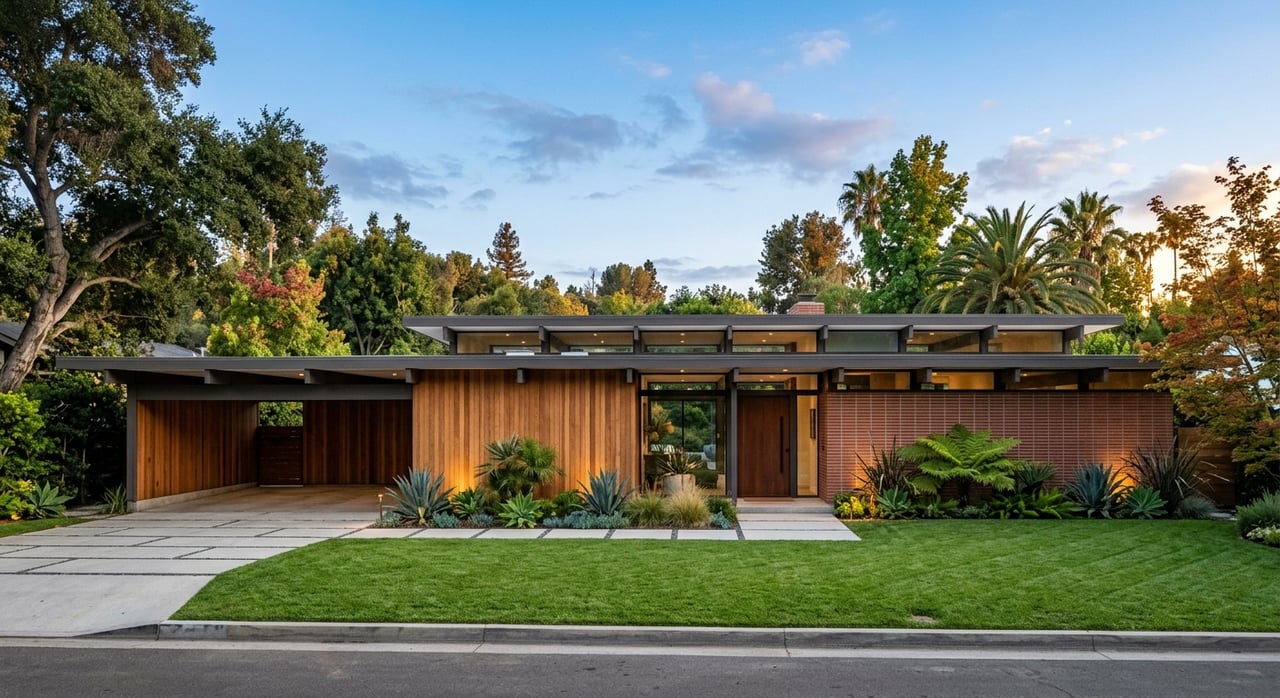
These homes tend to have a low, horizontal profile that feels grounded and easy to live in. Many include one-story living, broad front windows, and a close connection between the house and garage through an attached structure or breezeway. That straightforward layout is a big reason ranch homes remain so popular.
You may also see split-level homes from the same era. The National Park Service describes the split-level as a three-level plan with main living areas at or near grade, bedrooms half a floor up, and garage or extra living space half a floor down.
This layout became especially popular from the mid-1950s through the 1960s. In practical terms, split-levels often give you more separation between living and sleeping spaces while still keeping the broad, horizontal look people associate with midcentury design.
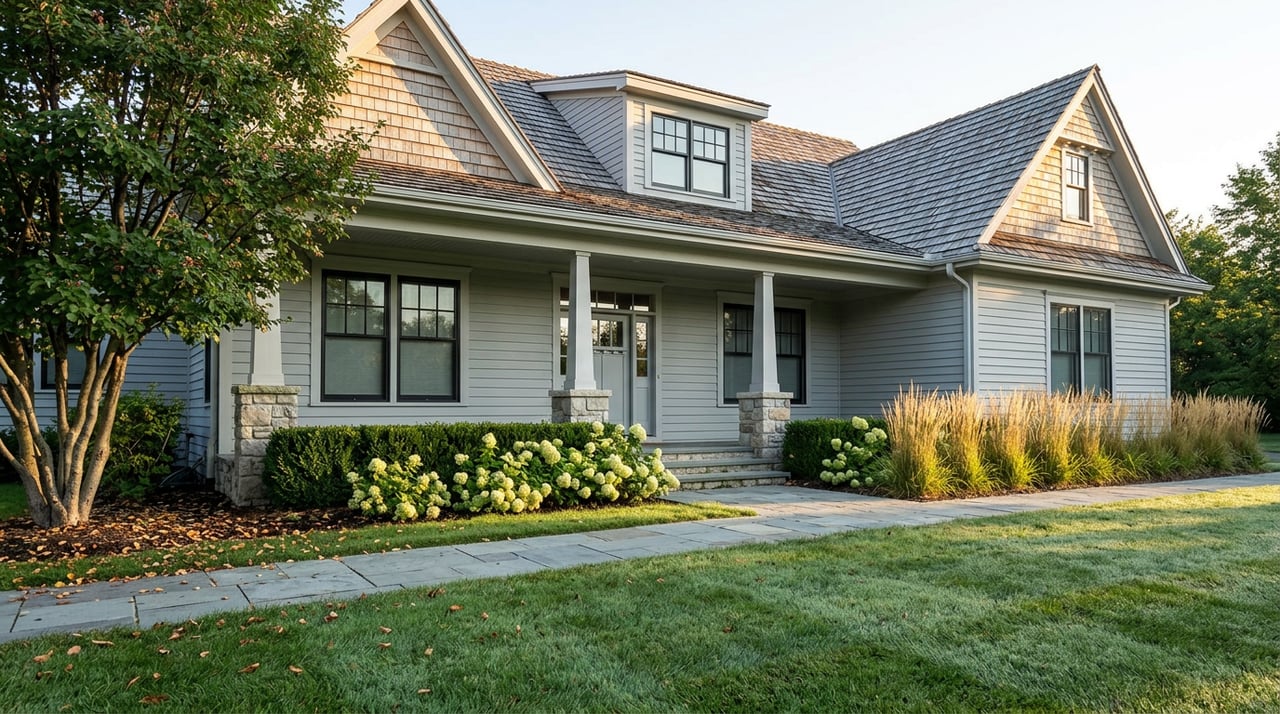
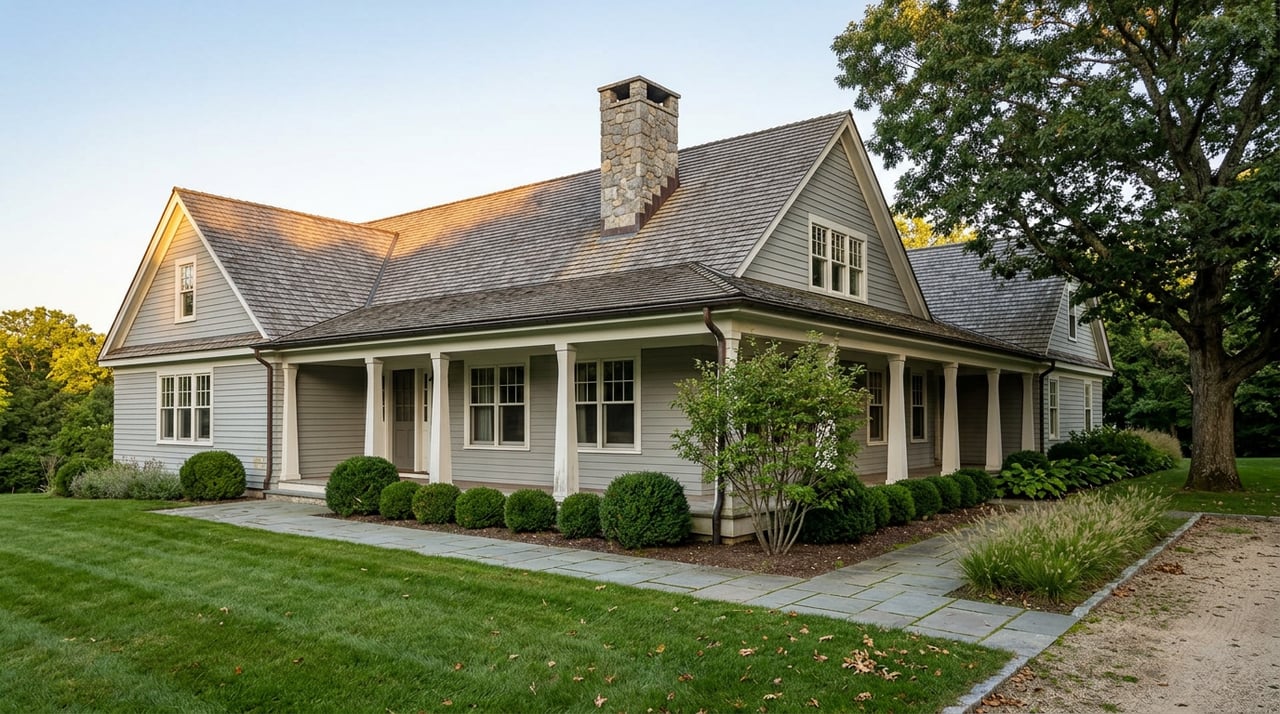
A defining part of the ranch style is its long, low silhouette. The National Park Service describes ranch homes as typically one story, with low-pitched roofs, moderate or wide eaves, and a strong horizontal emphasis.
That shape is a big part of the home’s visual identity. When you pull up to a well-kept midcentury ranch in Bayside, the roofline, the eaves, and the way the home stretches across the site often create the first impression.
Local examples help bring those features into focus. The 1957 ranch at 8812 Mohawk Road includes a large single-pane picture window, an attached breezeway, diagonal board accents in the gable peaks, and horizontal window patterns.
These details are more than decoration. They help define the home’s style, bring in natural light, and create the easy indoor-outdoor feeling many buyers still love today.
The National Park Service defines character-defining features as the visible and physical elements that express a historic property’s appearance. In Bayside’s midcentury homes, that often includes rooflines, eaves, window proportions, masonry or wood siding, fireplaces, and the relationship between the main house and the garage or breezeway.
If you are updating or evaluating one of these homes, those are the details worth noticing. Even small changes to openings, trim, or massing can shift the look of the house more than people expect.
When people ask what matters most in a midcentury home, the answer usually starts with the architectural shell. The silhouette, roof profile, eaves, window proportions, masonry accents, and garage or breezeway relationship tell the story of the house.
That does not mean every surface or finish needs to stay frozen in time. It means the most visible design elements should be handled carefully, especially anything that changes the home’s shape, scale, or street presence.
A thoughtful update can still feel fresh and current. The goal is not to avoid change. The goal is to preserve what gives the home its identity while improving comfort and function.
For most owners, the best first step is not cosmetic. It is making sure the house performs well. Based on Bayside assessor guidance and preservation principles, the safest early update path usually includes mechanical systems, insulation, windows or storm windows, moisture control, and routine exterior upkeep.
Bayside’s own assessor guidance treats items like roof repair, gutters, weather stripping, screens or storm windows, furnaces, electrical fixtures, and exterior paint as ordinary maintenance-type work. That gives you a practical roadmap for where many owners begin.
After the basics are handled, it is wise to protect the features that make the home look like a midcentury home in the first place. That means being careful with roof profile changes, major alterations to window openings, or updates that disrupt the relationship between the main home and garage.
In many cases, restraint adds value. Buyers who are drawn to Bayside’s midcentury homes usually want modern comfort, but they also want the architecture to still read clearly.
If you need more space, additions can work. The 1959 ranch at 8565 N Lake Drive later received a rear sunroom addition, showing that a smaller expansion can coexist with the original composition.
The key is proportion. Rear additions that remain subordinate to the original structure tend to preserve the home’s street-facing character more successfully than changes that overwhelm the original form.
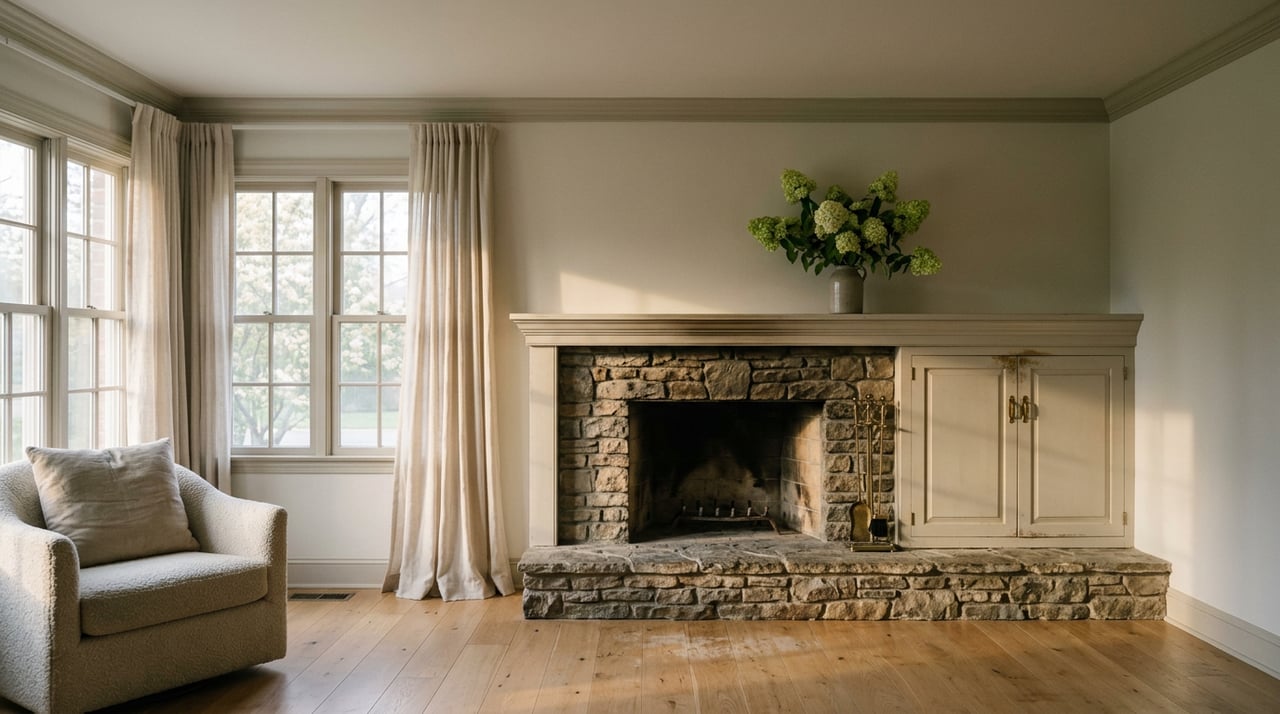
Midcentury homes usually show best when the staging supports the architecture rather than competes with it. Clean sightlines, low furniture, simple window treatments, and a restrained palette help the home’s lines, materials, and light stand out.
Heavy drapery, oversized furniture, or bulky decor can make a ranch or split-level feel smaller and less coherent. These homes often benefit from a lighter touch that lets the picture windows, fireplace, and horizontal layout do the work.
This is one reason presentation matters so much in Bayside. In a market where much of the housing stock already exists and much of the village is built out, buyers are often comparing nuances of architecture, condition, and livability rather than just square footage alone.
If you are shopping for a midcentury home in Bayside, it helps to look past surface finishes at first. Paint colors and decor can change quickly. Rooflines, window proportions, layout flow, and the placement of the garage are much harder to undo once they are altered.
Focus on the bones of the house first. Ask whether the home still has its essential form, whether updates respected the original design, and whether the layout fits the way you want to live.
A few smart questions can help guide your search:
Midcentury homes can be deceptively simple. Their appeal often comes from proportion, restraint, and details that are easy to overlook during a fast showing or a rushed pre-listing update.
That is where local context matters. In Bayside, understanding which features are common, which changes are routine, and which design choices may affect the home’s character can make your decisions more confident and more strategic.
Whether you are buying a ranch with great bones or preparing a midcentury property for sale, the best outcomes usually come from balancing preservation with practical improvements. You do not need to make a home feel like a museum piece. You just need to know what gives it lasting appeal.
If you are thinking about buying or selling a midcentury home in Bayside, Kelton Hatton can help you evaluate the architecture, prepare the home thoughtfully, and position it with the level of care these properties deserve.
Stay up to date on the latest real estate trends.
Get assistance in determining current property value, crafting a competitive offer, writing and negotiating a contract, and much more. Contact Kelton today to discuss all your real estate needs!